How Homeowners Actually Pay for an ADU
Most families don’t pay for a backyard casita out of a single checking account. The most common path is a loan secured by the home’s value, layered with…
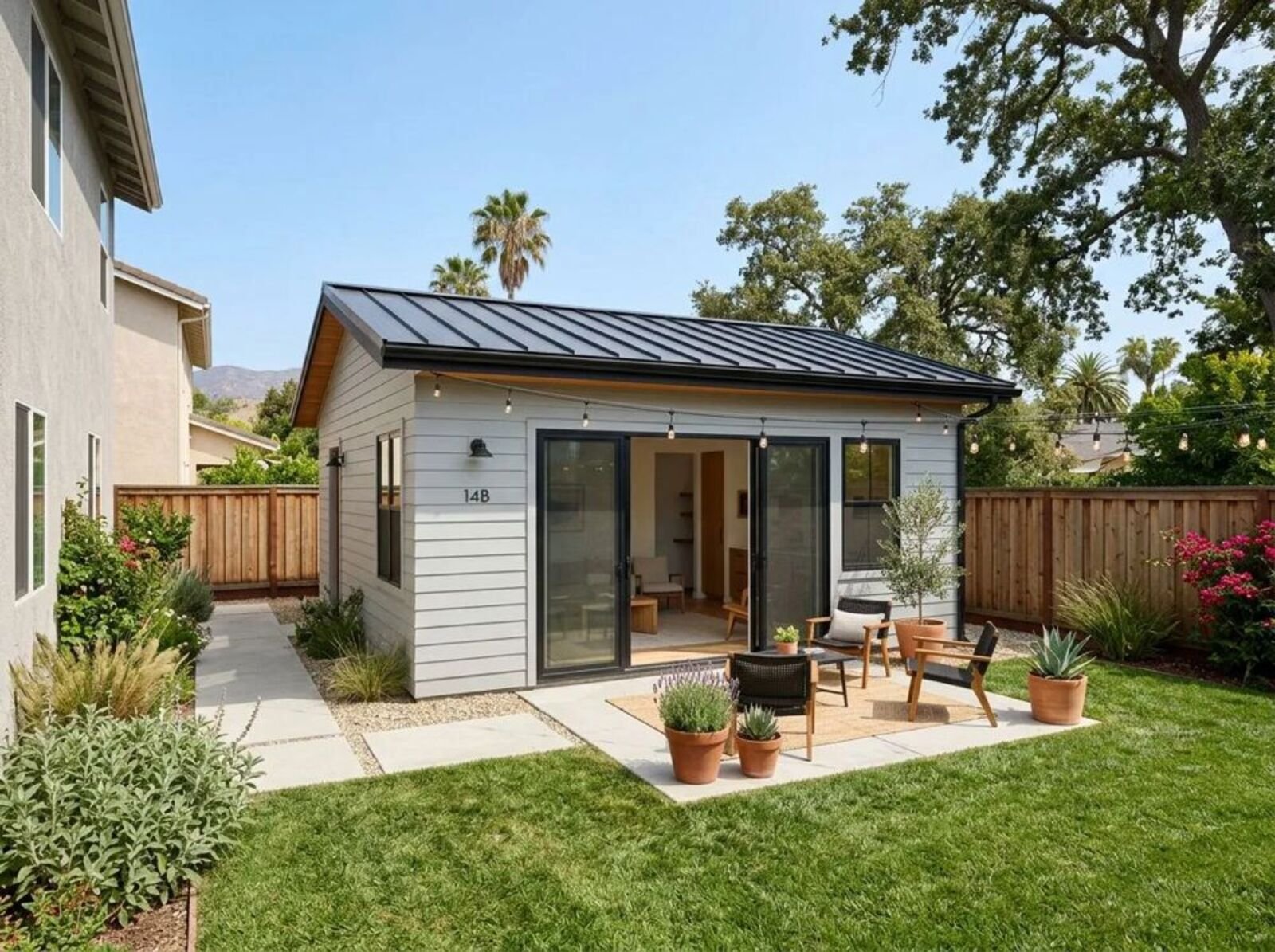
Most families don’t pay for a backyard casita out of a single checking account. The most common path is a loan secured by the home’s value, layered with savings and, for some owners, rent the finished unit may bring in. This guide walks through the ways Inland Empire homeowners typically fund an ADU, what each option tends to suit, and how the financing conversation fits into planning.
An ADU can create a home for a parent or adult child, add rental potential, or make better use of a lot you already own. Whatever the purpose, money questions come early. Here’s how they usually get resolved.
The most common way: borrow against your home
Because ADUs are built on property you already own, most owners use financing tied to that property. Three options come up again and again.
Home equity line of credit (HELOC)
A HELOC works much like a credit line attached to your home’s equity. You draw what you need as construction progresses, and you pay interest only on what you’ve used. For ADU projects that unfold over months, that flexibility can be useful. Interest rates are usually variable, so payments can change over time. A HELOC tends to suit owners who want draw-by-draw control and have solid equity built up.
Cash-out refinance
With a cash-out refinance, you replace your existing mortgage with a larger one and take the difference in cash. The full amount is borrowed from day one, usually at a fixed rate. This can suit owners who plan to stay in the home long term and prefer one predictable payment. It also resets the mortgage clock, which matters if your current loan is well along.
Construction loan
A construction loan is written for building. Funds are released in stages as milestones are completed — foundation, framing, and so on — and payments are tied to progress. Loans of this kind may convert to a standard mortgage when the work is done. The lender typically wants to see plans, a scope, and a schedule before committing, which makes early project definition useful.
Cash, savings, and other sources
Some owners fund part of the project with cash, especially smaller conversions or phases such as design and permitting. Common sources include savings, investment accounts, gifts or loans from family, and retirement funds. Using retirement money has tax and penalty implications worth reviewing with a tax professional before committing. Many real-world projects combine sources — for example, a smaller loan plus savings — rather than relying on a single one.
What lenders usually ask for
Financing conversations go more smoothly when a few documents are ready. Lenders commonly request:
- Proof of income and a credit review
- A recent estimate of your home’s value
- Project plans, scope, and a cost estimate
- A construction timeline and contractor details
Having a written scope and estimate before you apply helps the lender understand what the funds will cover. It also gives you a realistic number to borrow against, rather than a guess.
Where rent fits in
If the ADU is intended as a rental, its future income can help you qualify or carry the payment — but most lenders count only a portion of projected rent, and some require a signed lease or a completed unit first. Treat rental income as a helpful supplement, not the whole plan. Rents vary by location, size, and market conditions, and there are no guaranteed returns.
A practical order of operations
- Clarify the ADU’s purpose — family space, rental, or both.
- Review the property: zoning, space, access, and utility capacity.
- Develop an early scope and budget range.
- Talk with one or more lenders about the options that fit.
- Proceed with design and permitting once financing is outlined.
This sequence keeps spending aligned with decisions. Most owners find it easier to commit to financing once the property has been reviewed and the likely size and cost are understood.
How we help with the money conversation
At Terra Nostra Builders, the financing discussion is part of the first conversation, not an afterthought. We can talk through the options above, help you frame what your project is likely to require, and introduce you to lenders who work with homeowners building ADUs — with no obligation. You remain free to use your own lender; the goal is simply to help you plan with realistic numbers.
For context on what an ADU may cost to build, see our guide to how much it costs to build an ADU in California, or our Inland Empire ADU overview for how an ADU may serve your property plans.
If you’d like to talk through financing and your property in one conversation, contact Terra Nostra Builders for an initial discussion. There’s no commitment — just a clearer picture of what’s possible.
Terra Nostra Builders, Inc. California general contractor · CSLB #1132769
Frequently asked questions
What is the cheapest way to finance an ADU in California?
For homeowners with good credit and solid equity, a HELOC is often among the lower-cost routes because interest is charged only on amounts drawn. Actual pricing depends on your credit profile, lender, and market conditions, so comparing two or three lenders is worthwhile.
Can I use rental income from my ADU to qualify for a loan?
Some lenders count a portion of projected rental income toward qualification, and policies vary widely. Many require a signed lease or a rent history first. Ask each lender how they treat ADU income before relying on it.
Is a construction loan better than a HELOC for building an ADU?
It depends on your project and finances. A construction loan releases funds in stages and may convert to a mortgage, which suits ground-up builds. A HELOC offers flexibility for smaller projects and phased work. Comparing both against your timeline and budget is the practical approach.
Will building an ADU increase my property taxes?
Adding an ADU may lead to a reassessment of your property’s value, which can raise annual property taxes. The exact effect depends on your county’s assessment practices and your project’s scope. Your county assessor can explain how it would apply to your property.