Housing Sales Hit a 16-Year Low: Why Building an ADU Could Be a Smart Move for Inland Empire Homeowners
Existing-home sales are at their lowest since 2010. See why building an ADU could be a smart move for Inland Empire homeowners.
With existing-home sales at their lowest level in years, many California homeowners are rethinking their next move. Accessory dwelling units (ADUs) offer a different path worth exploring: adding living space, creating potential rental income, and making better use of the property you already own, without necessarily buying another home.
A slower housing market changes the math
The U.S. housing market has slowed considerably. According to the National Association of Realtors’ October 2026 report, existing-home sales fell 5.5% from September to a seasonally adjusted annual rate of about 3.75 million units, the lowest level since August 2010. Sales also declined 8.8% compared with October 2025.
Elevated mortgage rates are a central reason. Reporting on the same figures noted that rates averaged 7.33% in October, which continues to strain affordability for buyers (Inman; NPR).
For homeowners, this raises a practical question: if buying another property has become significantly more expensive, could improving the home and land you already own make more sense? For families in Rancho Cucamonga, Fontana, Ontario, Upland, and across the Inland Empire, one option worth considering is an ADU.
Five ways an ADU can put your property to work
1. Use the land you already own
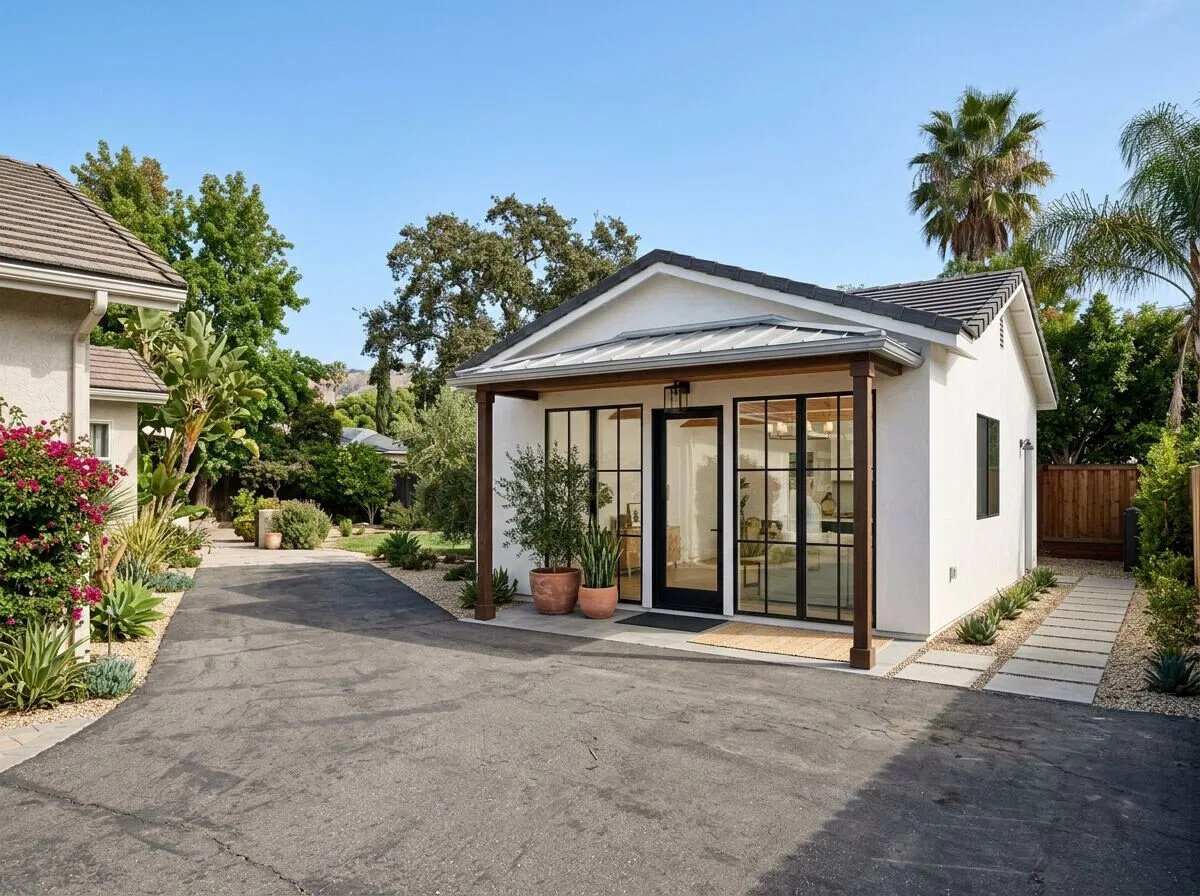
Many Inland Empire properties have backyard space, detached garages, or other areas that could potentially accommodate an ADU, depending on the lot. Rather than acquiring another property, an owner may be able to add an independent living unit, with its own entrance, kitchen, bathroom, and living area, subject to design and local regulations.
The leverage: turn underused space into functional residential space without buying land.
2. Create potential rental income
A legally permitted ADU may be rentable where local rules allow. As a purely illustrative example (not a projection or guarantee): a $200,000 construction investment with $2,000 in monthly rent would equal $24,000 in gross annual rent, about 12% of the illustrative investment before financing, vacancy, maintenance, insurance, property taxes, and utilities. Actual figures vary widely by property, city, and market conditions.
The leverage: the property could produce income in addition to housing.
3. Add space without giving up your mortgage
Many owners hold mortgages with rates lower than what a new purchase would carry today. Building an ADU can let a household add living space while keeping its existing primary mortgage in place, subject to the financing used for construction. For families who need more room but do not want to relocate, that can be a meaningful distinction.
The leverage: expand how your property serves you while preserving favorable financing on the primary residence.
4. Support multigenerational living
Many families need flexible arrangements for aging parents, adult children, or other relatives. An ADU can provide a separate residence on the same property, keeping generations close while maintaining independence. For some households, that can reduce total family housing costs compared with buying a second home.
The leverage: house multiple generations through one property rather than several purchases.
5. Improve functionality and potential appeal
A well-designed, legally permitted ADU may make a property more attractive to buyers who value flexible living arrangements or rental potential. However, an ADU does not automatically increase a home’s market value by the amount spent on construction. Its effect on resale value depends on comparable sales, property condition, permitted use, buyer demand, and appraisal considerations.
The leverage: greater versatility, with market appeal that varies by property and location.
Why the Inland Empire deserves a closer look
The region combines established neighborhoods, larger lots in some communities, and many multigenerational households. Cities such as Rancho Cucamonga, Fontana, Ontario, and Upland may present ADU opportunities depending on each lot’s conditions and local requirements.
Feasibility always needs an individual review. Setbacks, utility connections, fire access, building codes, easements, and site conditions all influence what can be built, and requirements differ between cities and between city and county jurisdictions.
Buying another property vs. building an ADU
| Consideration | Buying another home | Building an ADU |
|---|---|---|
| Land | A separate lot is typically required | Uses land you already own |
| Financing | A new mortgage is often needed | May use construction or equity financing |
| Up-front expenses | Closing and acquisition costs generally apply | Permitting, design, and construction expenses instead |
| Housing flexibility | A separate property | An additional unit on your existing property |
| Rental potential | Depends on the property | Possible with an eligible, permitted ADU |
| Family use | Family lives on a separate property | Multigenerational living on one property |
Neither option is universally better. The right choice depends on your finances, your property, and your long-term goals.
Start with a property feasibility assessment
Before committing to plans or construction, it helps to understand what your lot can realistically support. At Terra Nostra Builders, our preliminary discussions focus on property layout, potential ADU size, access, site conditions, and the scope of work involved in moving toward design and permitting. We help homeowners explore options ranging from garage conversions to detached backyard ADUs and new home construction.
If you’d like to go deeper on any of these topics, our guide to how much it costs to build an ADU in California, our comparison of garage conversion and detached ADUs, and our series on casitas and California’s housing crisis are good starting points. You can also read our guide to how homeowners pay for an ADU.
For an initial conversation, call (909) 600-5619 or visit tnblders.com. There’s no commitment, just a clearer picture of what your property may make possible.
Terra Nostra Builders, Inc. · CSLB #1132769 · Rancho Cucamonga, California
Frequently asked questions
Is building an ADU cheaper than buying another home in California?
It may require less total investment than purchasing a separate home because the land is typically already owned. However, construction costs, financing, permits, utilities, and site conditions must all be evaluated before comparing the options fairly.
Can I build an ADU on my property in Rancho Cucamonga or Fontana?
Many residential properties in California may qualify for an ADU under state law, but eligibility, design requirements, and permitting depend on the specific parcel and the local regulations that apply to it. A feasibility review is the practical first step.
Will an ADU increase my property value?
A permitted ADU may improve functionality and resale appeal. The actual value added depends on market conditions, comparable properties, and appraisal methodology, and it does not necessarily equal construction costs.
Can I rent out my ADU?
Long-term rental of a legally permitted ADU is generally possible in California, subject to applicable laws, local requirements, and any property-specific restrictions such as HOA rules.
Can I use my home equity to finance an ADU?
Some homeowners use home equity loans, home equity lines of credit, or construction financing. Loan approval, borrowing costs, and financial risks depend on the lender and the homeowner’s circumstances; Terra Nostra Builders is a contractor, not a lender.
Frequently asked questions
Is building an ADU cheaper than buying another home in California?
It may require less total investment than purchasing a separate home because the land is typically already owned. However, construction costs, financing, permits, utilities, and site conditions must all be evaluated before comparing the options fairly.
Can I build an ADU on my property in Rancho Cucamonga or Fontana?
Many residential properties in California may qualify for an ADU under state law, but eligibility, design requirements, and permitting depend on the specific parcel and the local regulations that apply to it. A feasibility review is the practical first step.
Will an ADU increase my property value?
A permitted ADU may improve functionality and resale appeal. The actual value added depends on market conditions, comparable properties, and appraisal methodology, and it does not necessarily equal construction costs.
Can I rent out my ADU?
Long-term rental of a legally permitted ADU is generally possible in California, subject to applicable laws, local requirements, and any property-specific restrictions such as HOA rules.